
Role of Tile Backing: Impact on Installation Success
Posted by Mike Belk on Dec 17, 2025

Most American homeowners never realize how much tile backing influences the lifespan of their floors and walls. One overlooked step can be the difference between a sturdy surface and a costly redo. In fact, improper backing is responsible for over 70 percent of tile installation failures. Discover what makes the right tile backing essential and how choosing wisely can protect your investment from moisture, movement, and everyday wear.
Table of Contents
- Defining Tile Backing and Its Importance
- Types of Tile Backing for Residential and Commercial Use
- How Tile Backing Affects Installation and Longevity
- Moisture Resistance and Waterproofing Considerations
- Common Mistakes in Choosing Tile Backing
Key Takeaways
| Point | Details |
|---|---|
| Importance of Tile Backing | Tile backing is essential for enhancing durability, adhesion, and performance of tile installations. It serves as a protective barrier and stabilizing support system. |
| Types of Tile Backing | Various backing materials such as Cement Board, Foam Membranes, and Liquid Membranes cater to specific needs for both residential and commercial applications. |
| Moisture Management | Effective moisture resistance through waterproofing strategies is crucial, as it protects the substrate and prolongs tile lifespan. |
| Common Mistakes | Selecting inappropriate backing materials or neglecting substrate preparation can lead to significant installation failures, emphasizing the need for careful consideration in material choice. |
Defining Tile Backing and Its Importance
Tile backing represents a critical component in tile installation that many homeowners and professionals overlook. At its core, a tile backing functions as a protective membrane and foundational support system designed to enhance tile performance and durability. Tile backing membranes serve multiple essential purposes, acting as a flexible barrier between the tile surface and underlying substrate.
The primary role of tile backing involves creating a stable, uniform surface that promotes proper tile adhesion and prevents potential installation complications. Depending on the specific application, backing materials can provide waterproofing, crack isolation, and structural reinforcement. Ceramic, porcelain, and natural stone tiles particularly benefit from high-quality backing systems that mitigate potential movement, moisture penetration, and structural stress.
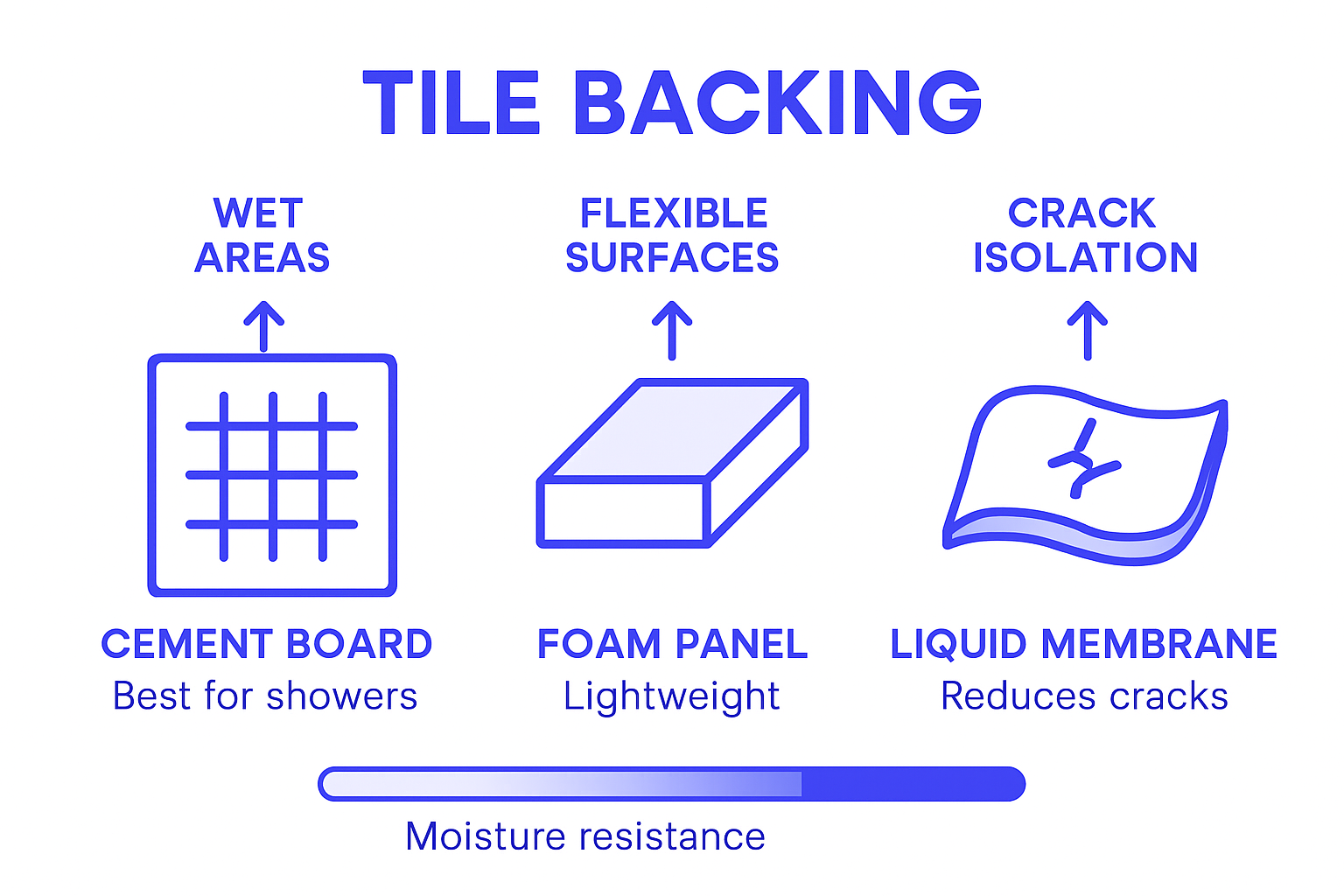
Understanding different types of tile backing is crucial for successful installation. Common backing materials include:
- Cement Board: Rigid, moisture-resistant panels ideal for wet areas
- Foam Membranes: Lightweight options providing excellent crack isolation
- Liquid Membranes: Paintable waterproofing solutions for complex surfaces
- Vinyl Composite Backing: Provides structural support and stability for specific tile types
By selecting the appropriate backing material, professionals and DIY enthusiasts can significantly improve tile installation quality, longevity, and overall performance. The right backing transforms a simple tile application into a robust, long-lasting architectural element.
Types of Tile Backing for Residential and Commercial Use
Tile backing materials vary significantly between residential and commercial applications, with each environment demanding unique performance characteristics. Commercial spaces require more robust backing solutions that can withstand high traffic, moisture, and frequent cleaning compared to residential settings.
In residential environments, homeowners typically select backing materials that balance durability, cost, and aesthetic appeal. Popular residential backing options include cement board for bathroom and kitchen installations, foam membranes for areas requiring minimal movement accommodation, and liquid waterproofing membranes for complex surface preparations. These materials prioritize moisture resistance, structural stability, and ease of installation.
Commercial tile backing demands more specialized solutions. Rubber tiles provide exceptional performance in high-stress environments, offering advantages such as:
- Chemical and corrosive material resistance
- Slip-resistant surfaces
- Dimensional stability under heavy traffic
- Comfort for workers standing for extended periods
Separate backing requirements emerge based on specific commercial contexts like healthcare facilities, industrial spaces, restaurants, and retail environments. Factors such as load-bearing capacity, thermal resistance, sound dampening, and hygienic properties become critical considerations when selecting appropriate tile backing materials.
How Tile Backing Affects Installation and Longevity
Tile backing plays a fundamental role in determining the overall success and durability of tile installations. Improper backing can lead to significant tile failures, causing delamination, debonding, and premature deterioration of the entire tile system.
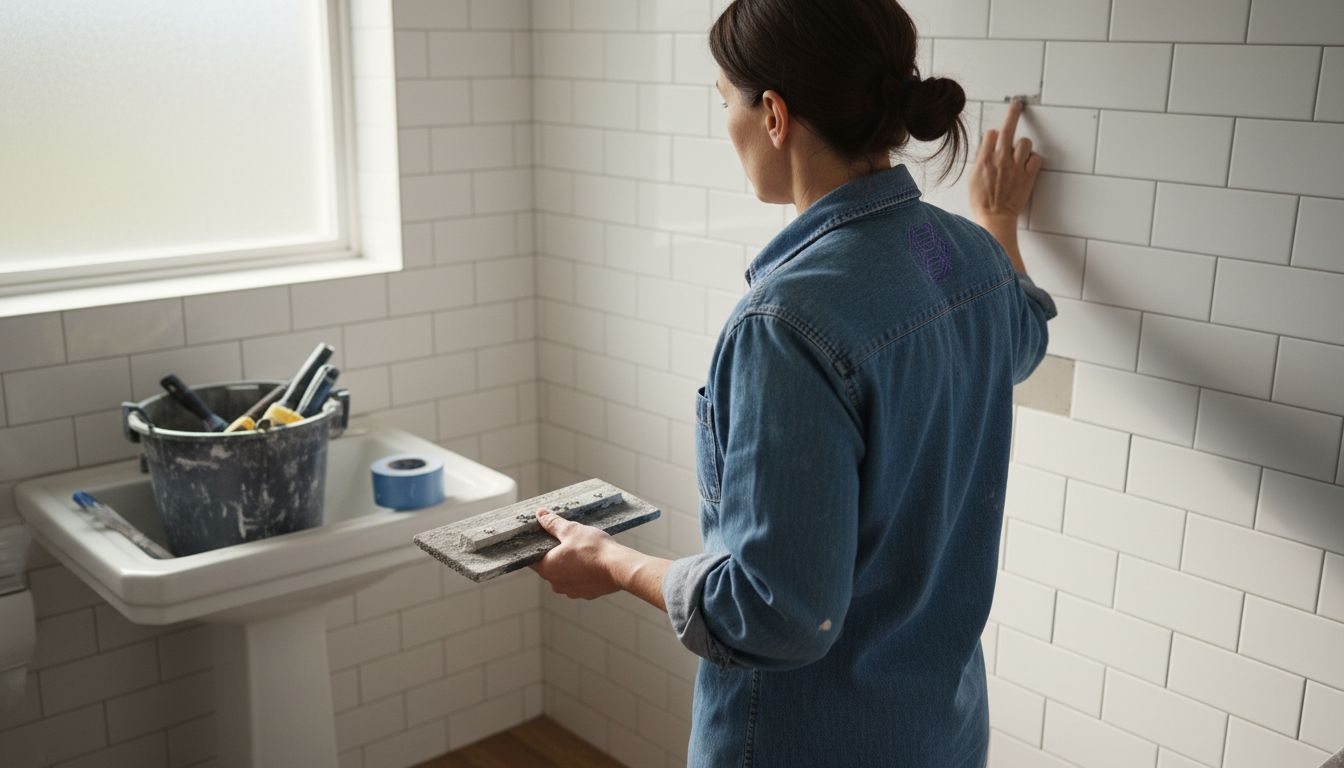
The substrate preparation process is critical in ensuring long-term tile performance. Moisture content, surface levelness, and structural integrity directly impact how effectively tile backing materials can support the tile installation. Certified installers carefully assess and address substrate conditions to create an optimal foundation that minimizes potential installation complications.
Key factors affecting tile installation and longevity through backing materials include:
- Moisture Resistance: Preventing water penetration and substrate degradation
- Structural Support: Providing a stable, even surface for tile adhesion
- Thermal Expansion Management: Accommodating natural material movements
- Load Distribution: Spreading weight and reducing stress points
- Crack Isolation: Preventing substrate imperfections from transferring to tile surface
Professional tile installers understand that selecting the appropriate backing material is not just a technical requirement but a strategic decision that determines the entire installation’s performance, aesthetic quality, and long-term durability. Proper backing transforms a simple tile application from a basic surface covering into a robust, resilient architectural element that can withstand years of use and environmental challenges.
Moisture Resistance and Waterproofing Considerations
Moisture management represents a critical challenge in tile installation, directly impacting the long-term performance and durability of tiled surfaces. Waterproof membranes play a crucial role in preventing moisture penetration across both vertical and horizontal tile applications, protecting the underlying substrate from potential water damage.
Different materials expand and contract at varying rates when exposed to moisture, creating complex challenges for tile installations. Ceramic tiles, concrete slabs, and plywood each respond differently to environmental conditions, necessitating sophisticated waterproofing strategies that accommodate these material variations.
Key waterproofing approaches for effective moisture resistance include:
- Liquid Membrane Applications: Paintable solutions providing seamless coverage
- Sheet Membrane Systems: Prefabricated barriers with precise edge treatments
- Penetrating Sealants: Chemical treatments that create internal moisture barriers
- Drainage Plane Technologies: Systems that redirect moisture away from critical surfaces
- Multilayer Waterproofing Techniques: Combining multiple protective strategies
Professional installers recognize that effective moisture resistance extends beyond simple surface protection. It involves creating a comprehensive system that manages moisture intrusion, allows for material movement, and preserves the structural integrity of both the tile and its underlying substrate. Sophisticated waterproofing transforms tile installations from potential moisture vulnerability to robust, long-lasting architectural elements.
Common Mistakes in Choosing Tile Backing
Selecting the appropriate tile backing requires careful consideration and technical expertise. Tile installation failures frequently stem from critical mistakes in backing material selection, with delaminating and debonding representing the most prevalent issues, especially on concrete surfaces.
Homeowners and contractors often underestimate the complexity of substrate preparation and backing material compatibility. Insufficient adhesive coverage, lack of proper control joints, and inappropriate material selection can compromise the entire tile installation. These errors create structural vulnerabilities that manifest through cracking, separation, and premature tile failure.
Common backing selection mistakes include:
- Ignoring Moisture Conditions: Selecting backing materials without assessing environmental humidity
- Overlooking Substrate Preparation: Failing to level and properly prepare the underlying surface
- Mismatching Material Expansion Rates: Choosing incompatible backing materials that respond differently to temperature changes
- Inadequate Adhesive Application: Not achieving full adhesive coverage between backing and tile
- Skipping Expansion Joints: Neglecting critical movement accommodation spaces
Professional installations require precise grout joint management, recognizing that even seemingly minor details can significantly impact long-term tile performance. Understanding these potential pitfalls allows for more strategic backing material selection and installation techniques.
Elevate Your Tile Projects with the Right Backing and Quality Tiles
Ensuring the success and longevity of your tile installation starts with choosing the right tile backing material to provide structural support, moisture resistance, and crack isolation. At BELK Tile, we understand how critical these factors are for both residential and commercial spaces. Whether you are addressing moisture challenges or looking to prevent tile failures, combining expert-backed installation practices with our high-quality tile selection can transform your project into a durable architectural feature.
Explore our extensive collection of ceramic, porcelain, natural stone, and specialty tiles crafted for lasting performance and style. With detailed product information and easy navigation on BELK Tile, you can confidently select tiles suited for bathrooms, kitchens, pools, and high-traffic commercial areas that complement industry-leading tile backing solutions. Start your project today by browsing our tile selections and discover how the perfect tile and backing combination can ensure your installation’s success.
Frequently Asked Questions
What is tile backing and why is it important?
Tile backing is a protective membrane and foundational support system for tile installation. It enhances tile performance and durability by creating a stable surface that promotes proper adhesion and prevents installation complications.
What types of tile backing are best for residential use?
Common residential tile backing options include cement board for wet areas, foam membranes for minimal movement, and liquid waterproofing membranes for complex surfaces. Each material offers specific benefits suited to home environments.
How does tile backing affect the longevity of tile installations?
Tile backing contributes to longevity by providing structural support, moisture resistance, and crack isolation. Proper backing prevents issues like delamination and helps manage thermal expansion, ensuring the tile installation remains durable over time.
What mistakes should be avoided when selecting tile backing?
Common mistakes include ignoring moisture conditions, inadequate substrate preparation, mismatching material expansion rates, and insufficient adhesive application. These errors can lead to tile failures and reduced installation quality.
Recommended