
Complete Guide to Why Choose Ceramic Tile
Posted by Mike Belk on Dec 02, 2025

Over 60 percent of american homeowners choose ceramic tile for its winning combination of style and strength. Choosing the right surface for a busy kitchen or high-traffic hallway is about more than looks. Ceramic tile stands out for its remarkable water resistance and low upkeep, making it a smart choice in spaces that see daily use. This guide will clarify what sets ceramic tile apart and help you see why it remains the top pick for both beauty and practical benefits.
Table of Contents
- Defining Ceramic Tile And Core Benefits
- Types Of Ceramic Tile And Key Differences
- Performance, Durability, And Style Options
- Cost Considerations And Installation Factors
- Comparing Ceramic Tile To Other Flooring Choices
Key Takeaways
| Point | Details |
|---|---|
| Durability and Maintenance | Ceramic tiles are durable and low-maintenance, making them ideal for residential and commercial spaces. |
| Water Resistance | Their exceptional water resistance makes them suitable for moisture-prone areas like bathrooms and kitchens. |
| Design Versatility | Available in various styles and colors, ceramic tiles offer design flexibility to suit different aesthetics. |
| Installation Methods | Proper installation is crucial, with options like thick-set and thin-set methods affecting performance and costs. |
Defining Ceramic Tile and Core Benefits
Ceramic tile represents a versatile and durable surface material crafted from natural clay that undergoes high-temperature firing processes. According to PathNet, ceramic tile offers exceptional performance characteristics that make it ideal for numerous residential and commercial applications.
At its core, ceramic tile provides remarkable water resistance, which explains its widespread popularity in moisture-prone areas. As PathNet confirms, ceramic tile is “impervious to water,” making it perfect for spaces like bathrooms, kitchens, basements, and entryways. This inherent water-resistance translates into practical advantages for homeowners seeking long-lasting, low-maintenance flooring solutions.
The core benefits of ceramic tile extend far beyond water resistance. Here are the key attributes that make ceramic tile an exceptional choice:
-
Durability: Withstands heavy foot traffic and resists wear
-
Low Maintenance: Easy to clean and maintain
-
Design Versatility: Available in countless colors, patterns, and styles
-
Hygienic Surface: Non-porous material prevents bacteria growth
-
Cost-Effective: Long-lasting solution with minimal replacement needs
For those interested in exploring more about ceramic tile characteristics, check out our guide on advantages of ceramic tiles in modern spaces. This comprehensive resource will help you understand why ceramic tile continues to be a preferred choice for discerning homeowners and designers alike.
Types of Ceramic Tile and Key Differences
Ceramic tiles represent a diverse family of surface materials with multiple variations tailored for specific design and functional needs. According to CSDC India, ceramic tiles encompass several distinct types, each offering unique characteristics and applications.
Types of Ceramic Tiles include:
- Unglazed Ceramic Tiles: Natural, matte finish with minimal surface treatment
- Glazed Ceramic Tiles: Coated with decorative and protective layer
- Quarry Tiles: Dense, robust tiles often used in commercial spaces
- Mosaic Tiles: Small, intricate tiles used for detailed design work
- Porcelain Tiles: High-density ceramic variant with enhanced durability
As The Crucible explains, ceramic tiles are fundamentally composed of silica, minerals, and clay, which are shaped and fired in a kiln. Their composition makes them less dense and more porous compared to porcelain tiles, which impacts their structural integrity and potential for cracking.
To better understand the nuanced differences between ceramic tile varieties, explore our comprehensive guide on the difference between porcelain and ceramic tile. This resource will help you navigate the intricate world of ceramic tile selection with confidence.
Performance, Durability, and Style Options
Ceramic tiles offer an impressive combination of performance characteristics that make them a top choice for homeowners and designers seeking both functionality and aesthetic appeal. PathNet highlights that ceramic tiles demonstrate remarkable durability while providing low maintenance requirements across various applications.
The performance variations among ceramic tiles are significant. Glazed ceramic tiles, for instance, provide decorative qualities but require careful consideration for placement. As PathNet notes, these tiles may be more susceptible to scratching and abrasion, making them best suited for low-traffic areas where aesthetic appeal takes precedence over extreme durability.
For those seeking maximum performance, porcelain tiles represent the pinnacle of ceramic tile engineering. According to CSDC India, these tiles are manufactured by heating clay at higher temperatures, resulting in thicker, damp-proof surfaces that are:
- Stain-Resistant: Excellent protection against spills and staining
- High-Density: Superior structural integrity
- Hardwearing: Long-lasting performance in high-traffic areas
- Moisture-Resistant: Ideal for bathrooms, kitchens, and outdoor spaces
Style options for ceramic tiles are virtually limitless. From classic monochromatic designs to intricate mosaic patterns, ceramic tiles can transform any space with their versatility. To explore more about selecting the perfect tile for your specific needs, check out our ceramic tiles: versatile and practical solutions for your home guide, which offers in-depth insights into matching tile styles with your unique design vision.
Cost Considerations and Installation Factors
Navigating the financial and technical landscape of ceramic tile requires understanding both upfront costs and long-term value. According to National Kitchen and Bath Association, ceramic tiles offer a more budget-friendly option compared to porcelain tiles, though modern technological advancements have complicated this traditional pricing dynamic.
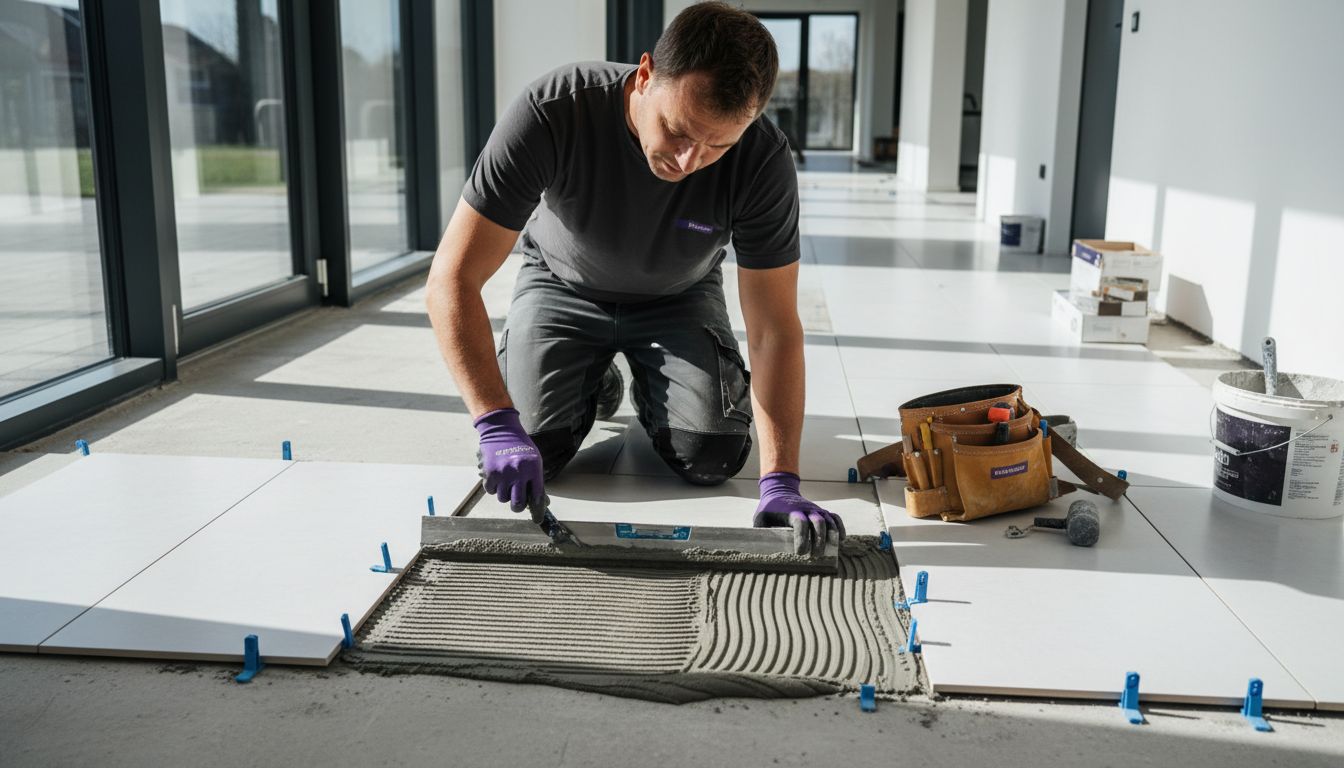
Installation is a critical factor that significantly impacts overall project expenses and tile performance. PathNet emphasizes that proper installation techniques are paramount to preventing potential failures. Two primary installation methods dominate the ceramic tile landscape:
-
Thick-Set (Mud-Set) Method: - More labor-intensive - Provides exceptional substrate stability - Ideal for heavy-duty commercial applications
-
Thin-Set Method: - Faster installation process - Lower material costs - Suitable for residential projects
While ceramic tiles generally present a more economical choice, the National Kitchen and Bath Association notes that durability can vary based on specific tile specifications. Factors influencing total project cost include:
- Material quality
- Tile type (glazed vs. unglazed)
- Installation complexity
- Square footage
- Professional labor rates
- Substrate preparation requirements
To gain deeper insights into making informed tile selection decisions, explore our comprehensive guide on ceramic tile composition and selection, which provides detailed information to help you make the most cost-effective and visually appealing choices for your specific project.
Comparing Ceramic Tile to Other Flooring Choices
Selecting the ideal flooring involves carefully weighing performance, aesthetic appeal, and long-term value across multiple materials. Kurawa provides critical insights into ceramic tile’s distinctive characteristics, highlighting its exceptional durability, low maintenance requirements, and impressive resistance to stains and scratches.
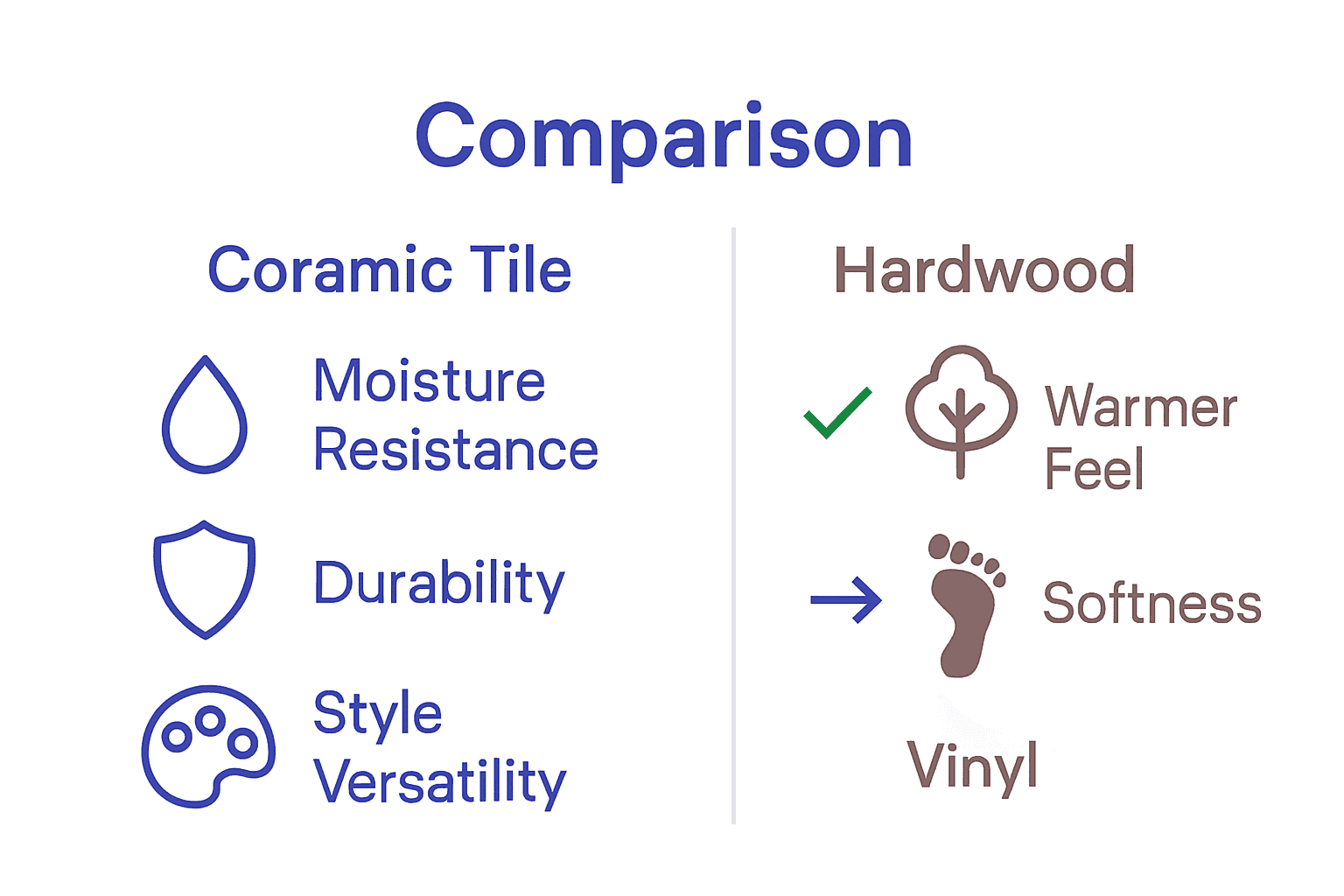
Compared to alternative flooring options, ceramic tiles present unique advantages and potential limitations. Key comparative factors include:
-
Hardwood Floors:
- Ceramic: More moisture-resistant
- Ceramic: Lower maintenance
- Hardwood: Warmer aesthetic
- Hardwood: Higher initial cost
-
Vinyl Flooring:
- Ceramic: Superior durability
- Ceramic: Higher resale value
- Vinyl: Lower installation costs
- Vinyl: More cushioned underfoot
However, ceramic tiles are not without drawbacks. As Kurawa notes, they can feel cold and hard underfoot, and may chip or crack if heavy objects are accidentally dropped. This characteristic makes material selection context-dependent, requiring careful consideration of specific room requirements and usage patterns.
For homeowners seeking deeper insights into tile selection nuances, our guide on kitchen flooring tile types offers comprehensive recommendations tailored to specific residential environments. Understanding these subtle differences can help you make an informed flooring decision that balances aesthetic preferences with practical performance needs.
Discover Durable and Stylish Ceramic Tile Solutions for Your Home
Choosing the right ceramic tile can feel overwhelming with all the options and performance factors to consider. This article highlights common challenges like balancing water resistance, durability, design versatility, and installation options. Many homeowners and designers want a tile that stands up to moisture without sacrificing style or longevity. If you are searching for a reliable, beautiful ceramic tile that fits your project needs and budget, your solution is here.
At BELK Tile, we specialize in offering a wide selection of high-quality ceramic tiles tailored for both residential and commercial spaces. Explore our collection to find tiles designed to resist moisture, wear, and stains while enhancing your space with endless color and pattern options. Whether you want a sleek glazed finish or a sturdy unglazed design, we make it easy to find exactly what fits your vision. Start your tile journey with us today and bring lasting beauty to your bathroom, kitchen, or outdoor area.
Take the first step to transforming your space by browsing our carefully curated ceramic tile collections. Visit BELK Tile now to view detailed product specifications, compare styles, and take advantage of exclusive online offers. Your perfect ceramic tile is just a click away.
Frequently Asked Questions
What are the core benefits of using ceramic tile?
Ceramic tile offers exceptional durability, low maintenance, design versatility, a hygienic surface, and cost-effectiveness, making it ideal for various residential and commercial applications.
How do glazed and unglazed ceramic tiles differ?
Glazed ceramic tiles have a protective coating that provides decorative appeal and helps with stain resistance, while unglazed ceramic tiles feature a natural, matte finish and are often more porous, resulting in different performance characteristics.
What installation methods are commonly used for ceramic tile?
The two primary installation methods for ceramic tile are the thick-set (mud-set) method, which offers superior stability for heavy-duty applications, and the thin-set method, which is faster and suitable for residential projects.
How do ceramic tiles compare to other flooring options like hardwood and vinyl?
Ceramic tiles are more moisture-resistant and lower maintenance than hardwood floors, while providing superior durability compared to vinyl flooring. However, ceramic tiles can feel cold underfoot and may chip if heavy objects are dropped.
Recommended