
Installing subway tile is one of the most effective ways to upgrade a kitchen backsplash, bathroom wall, or shower. Known for its timeless style and clean lines, subway tile is a favorite among homeowners and designers alike. The good news? With the right tools and preparation, installing subway tile can be a manageable DIY project.
This complete guide will walk you through everything you need to know—from surface preparation to grout and finishing touches—so you can achieve professional-quality results.
What Is Subway Tile?
Subway tile is a rectangular ceramic or porcelain tile traditionally sized at 3x6 inches. Originally used in early 1900s subway stations, this tile style has become a staple in modern kitchens and bathrooms due to its versatility and timeless appeal.
Tools and Materials Needed for Subway Tile Installation
Essential Tools
- Tile cutter or wet saw
- Notched trowel
- Tile spacers
- Level
- Measuring tape
- Rubber grout float
- Sponge and bucket
Materials
- Subway tiles
- Tile adhesive (thin-set mortar)
- Grout
- Tile sealer (if needed)
Step 1: Prepare the Surface
A smooth, clean, and dry surface is critical for proper tile adhesion. Remove any grease, dust, or debris. If installing on drywall in a kitchen backsplash area, ensure it is in good condition. For wet areas like showers, use cement backer board instead of drywall.
Pro Tip
Always ensure the wall is level before starting. Uneven surfaces can lead to misaligned tiles and poor results.
Step 2: Plan Your Layout (Dry Layout)
Before applying adhesive, lay out your tiles on the countertop or floor to determine the best pattern and spacing. This step, known as a “dry layout,” helps you avoid awkward cuts and ensures a balanced design.
Popular Subway Tile Patterns
- Brick (Offset): Classic staggered look
- Stacked: Clean and modern grid layout
- Herringbone: Stylish and eye-catching
- Vertical Stack: Contemporary and unique
Layout Tip
Start from the center of your wall and work outward for the most balanced appearance.
Step 3: Apply Tile Adhesive
Using a notched trowel, spread thin-set mortar evenly across a small section of the wall. Hold the trowel at a 45-degree angle to create ridges that help the tile adhere properly.
Avoid This Common Mistake
Do not spread adhesive over a large area at once—it can dry out before you place your tiles.
Step 4: Install the Subway Tiles
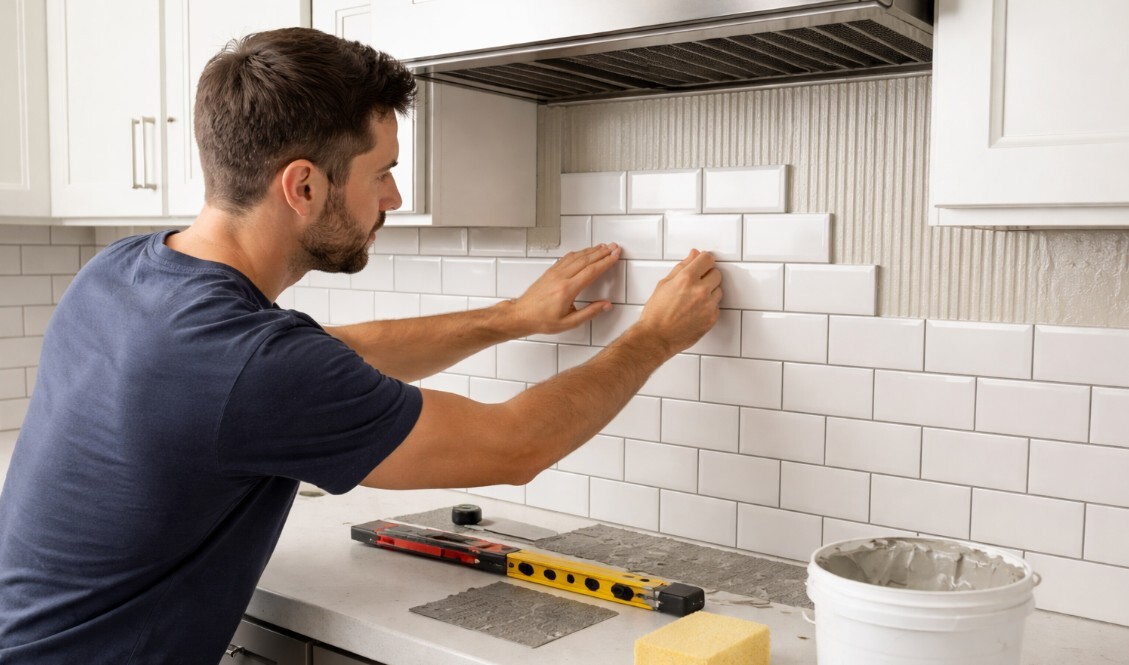
Press each tile firmly into the adhesive, using spacers to maintain even grout lines. Work in small sections and check alignment frequently with a level.
Cutting Tiles
Use a tile cutter or wet saw to make precise cuts for edges, outlets, and corners.
Step 5: Let the Adhesive Cure
Allow the tiles to set for at least 24 hours before applying grout. This ensures a strong bond and prevents shifting during grouting.
Step 6: Apply Grout
Using a rubber float, spread grout over the tiles, pressing it into the joints. Work diagonally across the tiles to fully fill the gaps.
Cleaning Excess Grout
After about 10–15 minutes, wipe away excess grout with a damp sponge. Rinse frequently to avoid haze buildup.
Step 7: Final Cleaning and Sealing
Once the grout has cured, clean the tile surface with a soft cloth. Apply a grout sealer if necessary to protect against moisture and stains.
Common Mistakes to Avoid When Installing Subway Tile
- Skipping the dry layout step
- Using uneven spacing
- Applying too much adhesive
- Not checking level frequently
- Rushing the curing process
How Long Does It Take to Install Subway Tile?
Most subway tile backsplash installations can be completed in 1–2 days, depending on the size of the area and your experience level. This includes drying and curing time.
Subway Tile Installation Tips for Professional Results
- Use leveling spacers for consistent alignment
- Choose the right grout color for your design
- Work in small sections for better control
- Keep tiles clean during installation
Frequently Asked Questions About Subway Tile Installation
Can beginners install subway tile?
Yes, subway tile is one of the most beginner-friendly tile options due to its simple shape and layout patterns.
What is the best adhesive for subway tile?
Thin-set mortar is the most commonly used adhesive for subway tile installations.
Do I need spacers for subway tile?
Yes, spacers ensure even grout lines and a professional finish.
Should I seal subway tile?
Most ceramic subway tiles do not require sealing, but grout lines should be sealed for protection.
What size trowel should I use?
A 1/4-inch notched trowel is typically recommended for subway tile installation.
Final Thoughts
Installing subway tile is a rewarding project that can dramatically enhance the look of your space. With proper planning, the right tools, and attention to detail, you can achieve a clean, professional finish that lasts for years.
Ready to start your project? Explore our full selection of ceramic subway tile to find the perfect style for your home.
FAQ on Subway Tile Installation
Yes, subway tile is one of the most beginner-friendly tile options due to its simple shape and layout patterns.
Thin-set mortar is the most commonly used adhesive for subway tile installations.
Yes, spacers ensure even grout lines and a professional finish.
Most ceramic subway tiles do not require sealing, but grout lines should be sealed for protection.
A 1/4-inch notched trowel is typically recommended for subway tile installation.